
Serving Queer Slop
Or, my anti-Heated Rivalry polemic.
Author’s note: I use the word “queer” throughout this essay as shorthand for men who are gay, bi, pan, etc. I also talk about trans men. If “queer” bothers you, or if you dislike trans men, either click out now or be civil should you choose to respond.
Also, CW for discussions of sexual violence, abuse, and homophobia.
On New Year’s, I made the egregious mistake of criticizing Heated Rivalry.
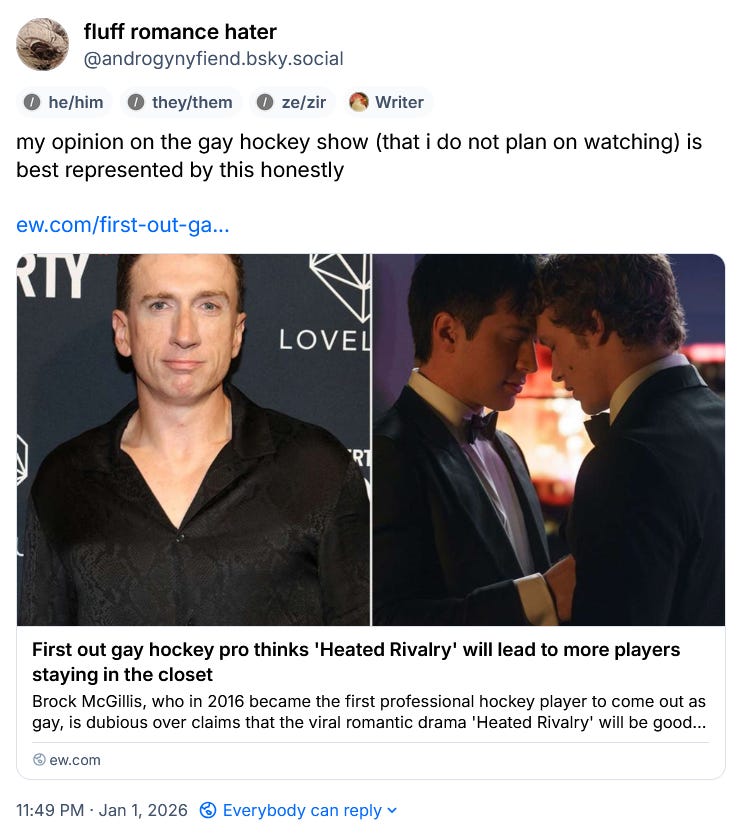
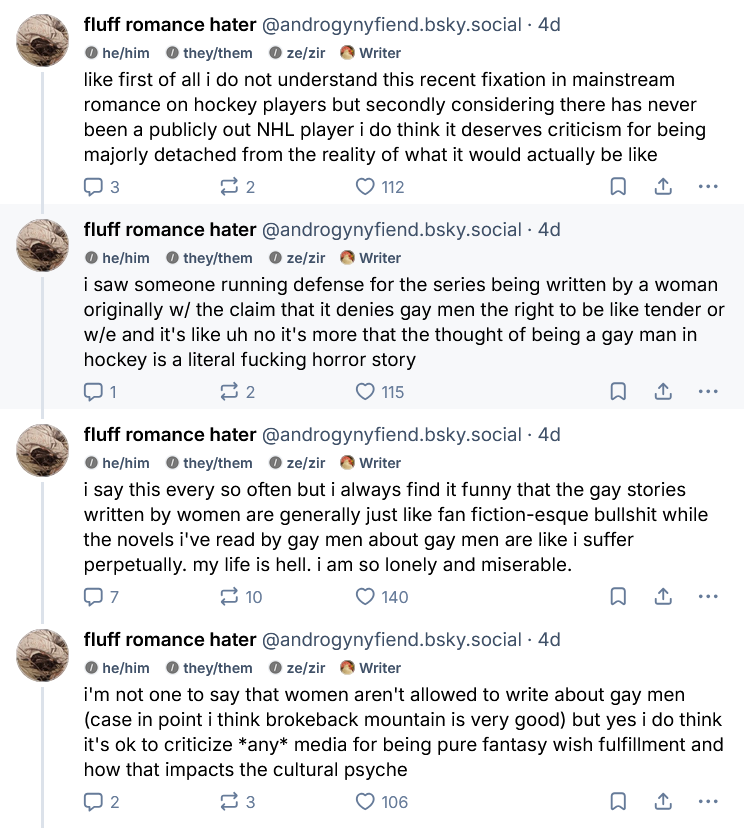
I’m not going to explain all the ins and outs of the ensuing dogpile and my crash-out because it’s not necessary. What is relevant, however, is this: my exposure to the show prior to this point was almost exclusively non-queer men praising it for being groundbreaking in its depiction of queer male sexuality and emotionality. This made me suspicious as such praise blatantly ignores decades worth of queer art and media. Combine it with the fact that I also saw hostility directed towards queer men who criticized it and I was primed to feel cool towards it.
When I saw that Brock McGillis -- the first of two professional male hockey players to come out as gay -- expressed his hesitation over the claim that this show would be helpful for other queer male hockey players, it helped articulate some of my own budding complaints. So I shared the article with some additional concerns about how wish fulfillment stories about queer men can misrepresent our lived realities and negatively impact our political consciousness. The backlash to my thread was swift and plentiful, with some criticizing me for taking the show too seriously and others criticizing me for downplaying how important and meaningful it is for queer people. Chief among the complaints, however, was that I should not share my opinions on a show that I haven’t seen.
So I watched it. And, of course, my concerns didn’t change because it was never really about Heated Rivalry to begin with. Heated Rivalry and the discourse around it are simply another symptom of a broader culture that values assimilationism and consumerism over art and political literacy and engagement. The contradiction present in the pushback to what I said perfectly highlights this: I want to be critical of mainstream depictions of queer men and the real-world implications of such depictions, and others do not want me to do so. I was accused of being pretentious, an asshole, a snob, a misogynist, of disliking queer happiness. There was intense resentment towards my efforts to politicize and dissect it, to compare it to the real-world experiences of queer men, to criticize queer fluff and porn that is elevated over queer art.
Now that the dust has settled, I’ll be poking the bear once more by fleshing out my thoughts and criticisms more in depth. And please -- for the love of God -- hear me out before you start yelling at me this time.
i. Shattering Queer Mirrors
In 1969, the Academy Award for Best Picture went to Midnight Cowboy. The film follows Joe Buck, a young Texan man who moves to New York City and ends up squatting in an abandoned apartment with a disabled con man named Rico Rizzo. Joe’s work as a sex worker -- including his encounters with both women and men -- is central to the story and depicted on-screen. The queer elements of the film should come as no surprise: Midnight Cowboy was directed by John Schlesinger and written by James Leo Herlihy, both of whom were gay.
In addition to being a critical success, Midnight Cowboy was a commercial success, grossing $44.8 million against a $3.2 million budget. In 2025 dollars, that’s $351 million, a gross high enough that, if released in 2025, it would be the fourth-highest grossing film in the US. In 1969, it was the third-highest grossing film.
Fifty-five years later, Luca Guadagnino, an openly gay director, released Queer, an adaptation of William S. Burroughs’ semi-autobiographical novella. The story follows William Lee, an American expat in Mexico, and his fixation on the younger Eugene Allerton; the film explicitly depicts their sexual encounters. While critics praised Queer, most awards for it were given to Daniel Craig for his performance, not the film itself. The Academy Awards didn’t acknowledge it at all. Commercially, it fared even worse: it grossed only $7 million worldwide against a budget of approximately $52 million.
Comparing these two films -- admittedly, two of my favorites -- reveals a few points: one, that queer art has existed for decades; two, that queer art has always been unapologetic; and three, that queer art is now arguably more devalued than it was before. Midnight Cowboy and Queer are similar in their background and content and yet the film that came out when sodomy was still illegal in most states received far more commercial and critical success than the film that came out nearly a decade after Obergefell v. Hodges.
My investment in this conversation isn’t purely academic or contrarian, but rather personal. Queer was revelatory to me as a gay trans man. I’d read the novella earlier while working on my own novel about queer men. Despite knowing the plot already, the film still destroyed me emotionally. Yet when I sought out others’ opinions, I was shocked to see how much negativity was directed towards it. Many people did not like the fact that Lee is pathetic and creepy instead of likeable or sympathetic; they decried the sexuality in the film as predatory and gross. I felt that this was missing the point, as Lee is supposed to be Burroughs himself, and Burroughs was a pathetic and creepy person with unsettling relationships. To make him anything else would be to erase its honesty and artistic integrity. He does not need to be likeable or sympathetic to be an important, meaningful gay character, and sex scenes do not need to be gratifying to be worth portraying. Sanding down his rough edges or making the sex scenes sexier might have made it more consumable, but it would have removed the emotional turmoil of the story and left it hollow and less authentic. More crucially, we should question why audiences demand to see polished, clean queer characters in queer art.
See, I draw a strong line between what I consider “art” and what I consider “content.” Art is something that challenges the person who engages with it and creates a deep sense of empathy by holding up a mirror. Art should not be comfortable; it should be transformative. I know that I’ve engaged with art when it has a profound impact on how I understand myself, others, and the world around me. Art leaves you wiser.
The fact that I was deeply unsettled by Queer is why it is art. It hit way too close to home by opening up deep wounds and examining fears I’d prefer to keep buried inside. I left in tears because I felt seen and understood and because I never wanted to be a Lee or an Allerton.
Content, on the other hand, tends to veer more towards wish fulfillment. In place of revealing anything about ourselves, it scratches deep, psychological itches by allowing us to see ourselves in our fantasies. Sometimes that looks like finding the love of our life; sometimes it’s being the strongest person on the planet; sometimes it’s causing unimaginable pain and destruction.
Let me be clear: I don’t think content is an inherently bad thing, just like I don’t think it’s a bad thing to enjoy eating a Hostess cupcake everyday. But if most of your diet is Hostess cupcakes, it’s going to have some notable, negative impacts. Your physical health will likely suffer, for one, as you’re not getting all the nutrients you need. Then your personal taste may suffer as well, as you become so accustomed to the taste of the cupcake that the thought of trying other food may become uncomfortable or even repulsive. Similarly, too much content, not enough art fractures our spiritual health and makes it more challenging to appreciate art when we encounter it.
This differentiation matters because it explains why so many people have been eager to call Heated Rivalry “groundbreaking” (and, for that matter, every other mainstream gay story since the film adaptation Love, Simon). Queer art already broke these barriers long before now. But mainstream queer content -- that’s newer.
I suppose Heated Rivalry is groundbreaking in the sense that I’ve never seen something that feels like a gay version of Fifty Shades of Gray receive this much attention and praise from straight people and dozens of mainstream news outlets. But I don’t know if I would categorize this as a meaningful win for queer men. I’ve seen plenty of depictions of gay intimacy before now, some of which are particularly explicit and even taboo -- I’m thinking, for instance, of novels like The Sluts and Exquisite Corpse. And even beyond written fiction, we’ve had graphic gay sex on mainstream television in recent years, such as Showtime’s Fellow Travelers and AMC’s Interview with the Vampire.
So, really, Heated Rivalry isn’t doing anything new at all. I’ve seen gay fluff before; I’ve seen gay sex before. It’s familiar and angsty and cozy in the way the gay fanfics I read on Tumblr as a teenager were. The show didn’t particularly move me. I thought the Christopher and Kip storyline was cute; everything else felt very standard. And yet -- for months -- I have seen dozens of people insist over and over and over that this show is groundbreaking, that it’s doing something unprecedented for queer men.
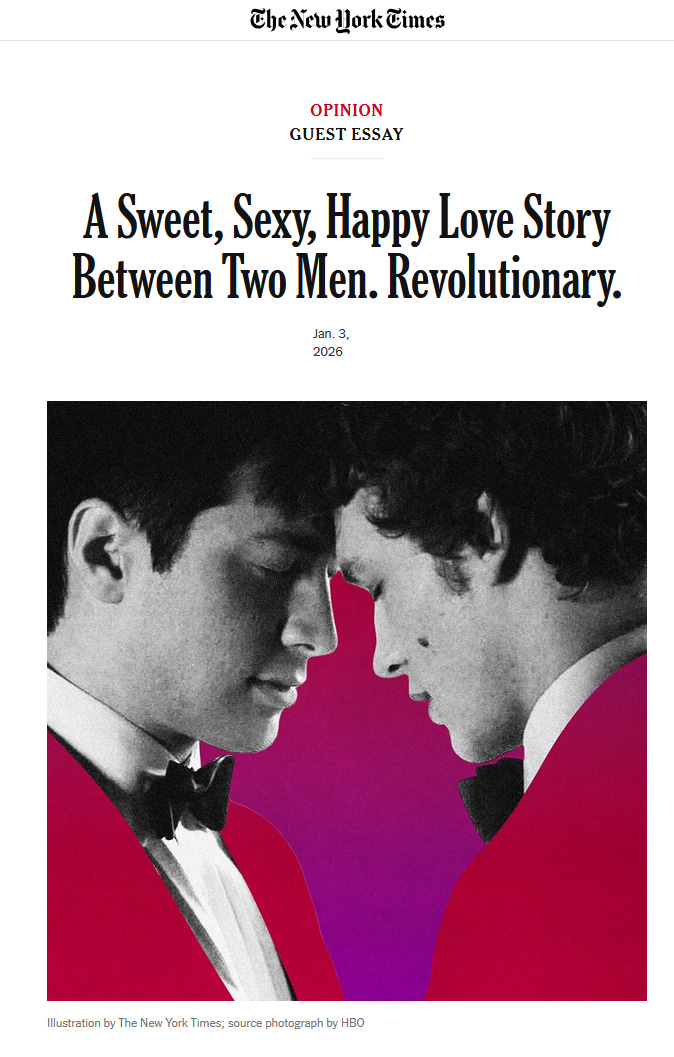
And it’s not just the sex that’s allegedly groundbreaking. For instance, a New York Times opinion piece (written by a gay historian, no less), stated:
Maybe what we ache for now is not culture built to serve a political end but a focus on the intimate — someone on top of us, breaking down in tears as he confesses his love. What is turning us on is not the thrill of naked bodies but the shock of being emotionally known. That is what some of us have been missing.
I deeply empathize with this point. This is precisely why I love queer art -- it makes me feel emotionally known.
However.
My first objection is to the idea that Heated Rivalry gets at the emotional interiority of queer men in a way that is unmatched by previous iterations of queer art -- or content, for that matter. I’ll expand more on this point later. My second -- and much deeper -- objection is to the idea that the intimate must be prioritized over the political, or that these can even be separated at all.
To be fair to the author, I don’t believe Jim Downs is arguing that queer stories should abandon politics entirely. Rather, he seems to be criticizing the phenomenon where stories about or featuring queer people often turn into a sort of after-school special to teach straight people about how gay people are just like them, too.
Still, it’s worth noting that much of the pushback I got to my original thread was because I was making the show too political. The phenomenon Downs mentions -- no doubt exhausting and patronizing -- is the politics of gay assimilationism. Unfortunately, Heated Rivalry is simply the next iteration of gay assimilationism, whether intentionally or not.
ii. Fujoslop Brainrot
Boys’ love (BL) -- or yaoi, if it’s more sexually explicit -- refers to a Japanese genre of media that depicts queer relationships between men. One of its key defining features is that it is created by women, for women. Japanese media about queer men, by queer men, and for queer men is referred to instead as gei komi or, by some, as bara. Female fans of BL have been tormented over the years; the term fujoshi, which translates to “rotten girl,” was coined to describe them -- and has since been proudly reclaimed.
While fujos have been calling themselves such for years, the recent proliferation of the word is linked to the explosion of popularity of BL outside of Japan. And while BL does refer to a specific genre with specific tropes, its popularity very much coincides with the popularity of gay content as a whole in the West. Take, for instance, this timeline of BL compiled by a fan on Reddit between the 1970s and 2022, where approximately 43% of the main entries came out in the last 10 years. Another fan’s documentation of BL TV shows in various Asian countries reveals that between 2018 and 2022, the number of BL shows multiplied eightfold.
Notice, too, how the subreddit I linked to is in English. BL is now globalized; it overlaps heavily with other queer art and content. Even in that timeline of BL, the original poster added Brokeback Mountain, Call Me By Your Name, Love, Simon and Heartstopper as other influential BL works despite the fact that they are ostensibly not BL in the original sense of the term.
BL tropes and fujoshi tastes have become more ubiquitous. BL loves its beautiful, androgynous boys. Sexual dynamics largely revolve around anal penetration, with bottoms (uke) being more effeminate and tops (seme) being more masculine (but still often beautiful and hairless, not overtly manly). The abuse and rape of the uke -- especially by his love interest -- is quite common. This is what I’m referring to when I say “fujoslop”: content (not art) about the sexual and/or romantic lives of queer men primarily consumed by non-queer men.
Fujoslop touches all queer media nowadays, even queer art. For instance, let’s return to Luca Guadagnino. Seven years before Queer, Guadagnino directed Call Me By Your Name, another explicit, gay love story between the 17-year-old Elio and the 24-year-old Oliver (although the book was written by André Aciman, who identifies as straight). Unlike Queer, Call Me By Your Name was a commercial success, grossing $43.1 million against a $3.5 million budget. It won over 100 awards and received over 250 more nominations, including a Best Adapted Screenplay win for (the openly gay) James Ivory and a Best Picture nomination at the Oscars.
Now, am I calling Call Me By Your Name fujoslop? Not necessarily. But I do think there is a considerable fujoslop factor as to why it was so successful while Queer failed to make a substantial impact. Specifically, the dynamic of Elio and Oliver in Call Me By Your Name has far more in common with BL tropes than the dynamic between Lee and Allerton in Queer. I believe that those commonalities ultimately aided in its success.
Look, I just don’t believe that Timothée Chalamet’s performance as the beleaguered twink in Call Me By Your Name would have made him a star if he hadn’t also captured the fujo heart. On Archive of Our Own, the most popular spot for fan fiction on the internet, we can see this truth: Call Me By Your Name has nearly 2,400 fanfics, with Elio being the most popular character tagged within these fics. Compare this to Chalamet’s other 2017 movie, Lady Bird, which only has 38. Queer, meanwhile, barely has 40 versus the 1,100+ fanfics written for Guadagnino’s other (homoerotic, bisexual) 2024 film, Challengers.
I don’t know why Queer failed so hard in comparison to Call Me By Your Name. But what I do know -- just based on our AO3 numbers here alone -- is that Queer resists fujoslopification.
Heated Rivalry, on the other hand, is perhaps peak fujoslop. Our gay hockey players look like Ken dolls. Ilya is dominant, straightforward, and horny; Shane is our timid, gay virgin who’s also eager to try. In the first two episodes, a quarter of the runtime is spent on Shane and Ilya being sexy and naked and fucking. They spend literal years fucking in-show before we finally get our soft boy emotional breakdown in the last two episodes.
Is it wrong to enjoy fujoslop? No. I already mentioned that I enjoyed the Christopher and Kip plotline, which is absolutely fujoslop for the fluff lovers. Hell, I have written fan fics with similar plots to Heated Rivalry. But it’s content, not art. And the problem is that fujoslop content is incredibly popular right now. Its popularity incentivizes the profit-driven media industry to invest further in fujoslop, because that’s what’s going to get high returns, especially from female audiences as they are -- by far -- the largest addressable consumer audience. And if everything mainstream about queer men -- even queer art -- is inevitably affected by fujoslop, then what impact does that have on us? What messages are we getting about queer men and queer life? How is it shaping the way we understand homophobia and queer liberation?
This is why my criticisms of the show are political, ultimately. For instance: I’ve seen multiple people claim that this show will make a dramatic impact in the lives of gay hockey players. But when one of only two openly gay hockey players expressed some trepidation about that claim, the response from many was irritation, as if he doesn’t have intimate familiarity with homophobia within the professional hockey world. This alone proves that Heated Rivalry did not actually open a conversation about homophobia in hockey; rather, people have directed their ire towards one of those gay hockey players talking about homophobia because it harshes their vibe!
And even if we wanted this to be completely apolitical, to divorce it completely from any serious conversations about homophobia, it’s still worth interrogating. For starters, Heated Rivalry was adapted and directed by Jacob Tierney, a gay man, but it was originally based off of the Game Changers novels, which were written by Rachel Reid. While I haven’t read the novel of the same name, multiple Goodreads reviews assured me that the novel is, essentially, erotica… and that the majority of people reading this book appear to be women.
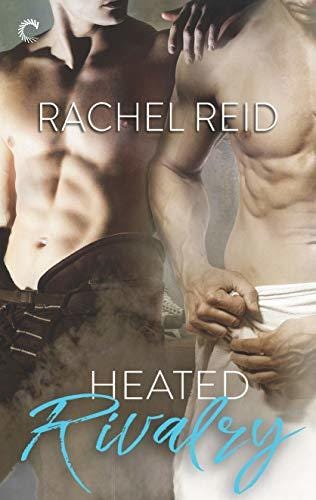
So yes, Heated Rivalry is fujoslop. Even if Tierney added scenes to the show to build Ilya’s and Shane’s emotional arc, the foundation is still fujoslop. And I object to spinning this as a win for gay representation when fujoslop has existed for ages and only ever represents the same kind of queer man because, ultimately, it exists for women to jerk off to.
To be more pointed: when Heated Rivalry introduced Shawn, my immediate thought was, oh, of course the one fat, Black character gets to be the sassy, flamboyant friend and not one of the gays getting laid. And of course none of the four gay leads are overly effeminate; they all exist within the realm of men that straight women would plausibly want to fuck. And of course I have to sit here and listen to people assert that this is good and groundbreaking gay representation when I know for a fact that this show would be dead in the water if Shane had a pussy instead of a cock, as evidenced by the number of gay transphobes who have made it very clear that I am a disgusting, mutilated pervert because of my genitals and the fanfic girlies who bend over backwards explaining how their male characters can give birth in the Omegaverse without a vagina.
This is fujoslop brainrot. It’s framing -- quite frankly -- pornography as a representation win. And to be extremely clear, I’m not an anti-sex prude in the least. I strongly believe that people are too moralistic and censorious when it comes to art. No, my issue is that porn(-adjacent) depictions of sex are lauded and valued more than artistic depictions of sex, and any attempt to point out the imbalance at play -- or how it’s ultimately consumerism promoting it at the expense of meaningful art -- is immediately shut down. If porn was liberatory, then women would have been liberated long ago. Why should we believe any different for queer men?
Lastly, before anyone accuses me of being too harsh to women, let me clarify three things. Firstly, not all stories about queer men created by women are fujoslop. Brokeback Mountain is perhaps the best example of this. Jack and Ennis do not exist to fulfill a fantasy but rather represent men grappling with longing and grief. Secondly, BL ultimately falls within the realm of romance fiction, a genre that has always been predominantly created and consumed by women. Women have historically been the most active within yuri spaces as well – the Japanese genre about queer relationships between women. The gender division tends to skew very heavily towards women. Finally, even if queer men are producing and consuming fujoslop, it’s still ultimately bad for queer art. My criticism doesn’t change. A fujoslop diet is a Hostess cupcake diet; it does not help queer men learn more about ourselves or encourage curiosity in the world around us.
iii. No Fun Allowed
As I was writing this essay, I saw a post from the Lemkin Institute that warns that the US government is engaging in genocidal actions and rhetoric against trans people. Regardless of your thoughts on that statement, I mention it because being trans in this day and age is a nonstop battle to make people take your right to exist seriously and to believe that you are a human being with autonomy. It’s so deeply stupid and dehumanizing to have to do things like check to make sure I’m not breaking the law in every state I visit by pissing in the men’s restroom. But that’s how life is at the moment.
So yes, actually, I get pissed off when people either insist that we make queer art and content less political, or when they claim that the absolute, bare minimum is political. Quite literally every part of my life is readily turned into political theater and is something I have to be constantly aware of. Every day I am subjected to some sort of abuse because I have the audacity to be trans. My queer art is political because my life is political. It pushes boundaries because others have to learn to be uncomfortable with the status quo to make any change.
One argument I hear a lot is that since everything is political already, it’s only fair for us to turn our brains off every now and then. But apoliticism is still political. As far as I’m concerned, there is functionally no difference between, say, the Trump administration’s focus on stopping trans boys from transitioning and mainstream content about queer men never including trans men. Even if the fujoslop creators are self-described trans allies, the end result is still the same. Trans men are too politically controversial; trans men aren’t sexy enough for the general public. So the media industry says we aren’t profitable enough. We don’t get to exist in shows like Heated Rivalry. The audience who would enjoy trans fag wish fulfillment is simply too small.
But I don’t want trans fag wish fulfillment because it would depoliticize the struggle for trans liberation. Instead of challenging the status quo, trans fag wish fulfillment would find our place within it. Wish fulfillment necessitates depoliticization because it neglects the parts of reality that contradict our wishes and instead gives us the outcome we desire. In fact, I’d argue the reason we’re in this fujoslop era to begin with is because cis queer men have been so heavily depoliticized.
I don’t think it’s a coincidence that the wave of fujoslop content started immediately following Obergefell v. Hodges. In his New York Times opinion piece on Heated Rivalry, Jim Downs wrote:
For years, queer representation in mainstream culture was driven by a political imperative. We needed to be palatable, monogamous and mortgage-ready to be tolerated. You could see this impulse in “Will & Grace,” where queerness was domesticated through friendship and slapstick, and later in “Modern Family,” where the suburban gay couple were beloved precisely because they reassured straight viewers that nothing about them was too strange, too erotic or too much. A lot of what is being produced about gay men, even now, replicates a straight world in rainbow colors.
Once again, I generally agree with Downs on this point. However, I do have two issues: one, the “political imperative” driving this assimilationist depiction of queer men was, ultimately, a depolitical urge that sought to normalize affluent, cis, and mostly white gay men at the expense of the more “undesirable” queers; and two, that the fujoslop content mill still plays into this assimilationist mindset by refusing to meaningfully challenge the status quo.
To better demonstrate what I mean, let’s return to the discourse around Heated Rivalry. Much of it has focused on the safety of queer male professional hockey players. Rachel Reid herself stated that she wrote Game Changers in response to homophobia within the NHL.
Alright, then. In 2025, the NHL opened with a roster of 726 men. If, say, 5% at most were queer, then we’re looking at up to 36 queer NHL players active right now.
Does the current state of gay rights really hinge upon the ability of 36 players to be out openly?
Maybe this seems like an unfair point to make. After all, there’s far more to professional hockey than the NHL; the International Ice Hockey Federation reported 1,386,209 registered male hockey players in 2024, after all. Additionally, the animosity that queer men face within the locker rooms of the NHL is a serious issue that can be felt in all traditionally masculine spaces.
But that’s just it -- this issue is not limited to NHL locker rooms. The vast majority of queer men -- nearly 100% -- are never going to step foot in an NHL locker room. Heated Rivalry barely addresses homophobia within the locker rooms to begin with, much less outside of it. Homophobia is largely implied but never really confronted outside of brief discussions about how terrible it is to be gay in Russia. I spent the show feeling confused about why Shane was so reluctant to come out considering nobody in his life demonstrated homophobic sentiments and were quite supportive otherwise. Really, the show felt like it was actively refusing to grapple with how homophobia impacts the lives of these hockey players (beyond concerns about Russia) and their relationships with each other in favor of a much more sexy, straightforward plot. None of our characters are politically active or aware; they are not complicated and messy. They are just there to look pretty and have gay sex.
So when people argue that this show is a step forward for queer men, I wonder… how? Because it depicts queer men existing? How is that useful if the primary audience is already seeking out stories about queer men to begin with? And then when people argue that this show isn’t political, I again ask… how? Reid stated her inspiration was to combat homophobia within the NHL, so doesn’t that already carry with it a political motive? Is it truly possible to be apolitical?
Defenders of the show are stuck in a mentality where they want to have their cake and eat it too. That is, Heated Rivalry is a bold step forward for the rights of queer people everywhere, but also it’s unfair to view it politically because it’s silly fluff and not a serious political statement. Missing in this broader conversation, though, are things like the dozens of publicly out female professional hockey players (ending homophobia is just not as sexy when it’s women fucking, I guess) or, you know, things that impact a much larger number of queer men.
Take, for instance, my earlier mention of rape and abuse being a frequent trope within the BL genre. In 2017, the National Intimate Partner and Sexual Violence Survey found that queer men in the US experienced rates of sexual violence comparable to straight women. Much of the queer art that I adore addresses this reality head-on; there is no lack of representation regarding this specific issue. But when it comes to queer content, we either see this violence romanticized (such as the plethora of manga where it is used as proof of love and attraction) or side-stepped altogether.
Now, I’m not arguing that every queer story ever has to talk about heavy topics like sexual violence. Rather, I am questioning the cultural landscape we live in where people bristle at honest depictions of dysfunctional -- and even abusive -- dynamics between queer men, such as Lee and Allerton in Queer, but don’t question why queer content either avoids approaching the issue, deals with it in a way that seems like the creators are uncomfortable talking about it themselves, or uncritically upholds it.
As an example, while watching Heated Rivalry, I was thinking about conversations between queer men about down-low (DL) guys -- that is, men who engage in queer sex secretly but identify as straight otherwise. It is quite common to encounter queer men who have had awful experiences with DL guys, as DL guys are often emotionally immature and sometimes dangerous. While neither Ilya nor Shane necessarily qualifies as “down-low” in the same way, there is an obvious disconnect in the way that fujoslop will sometimes romanticize and woobify the DL guy and give him his grand, emotional awakening with no real long-term damage caused along the way. But the fact of the matter is that, uh, being closeted like that really fucks with you! It cuts so deep into your psyche and completely colors the way you interact with everybody for the rest of your life. Being closeted is scary and violent and dangerous and, unfortunately, can make you a worse person for it. No, it’s not guaranteed. No, it’s not permanent, necessarily. But it happens.
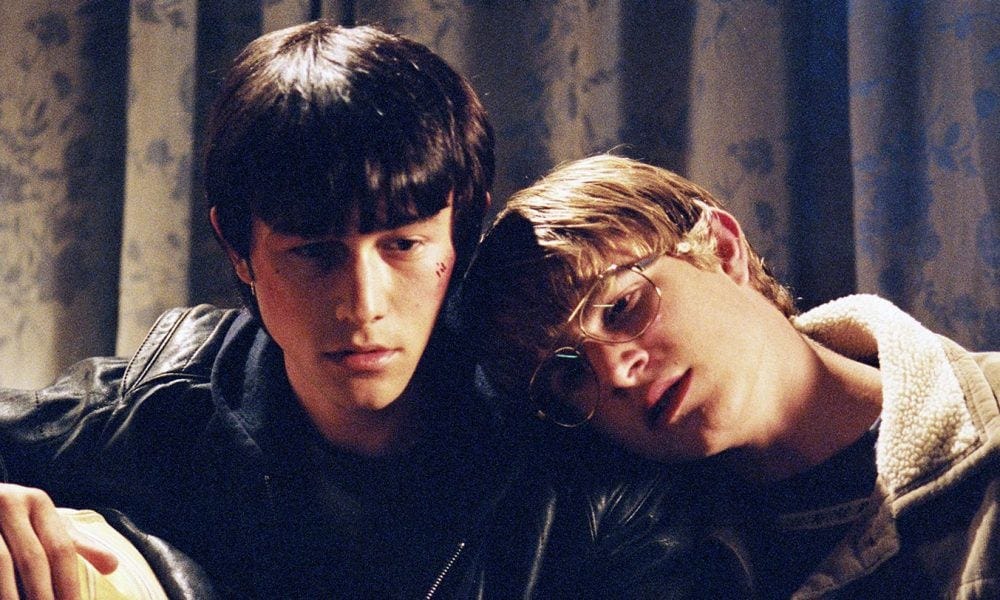
But I don’t see queer content about that. I see queer content about hot twinks who are in tune with their emotions and cry and kiss. And it’s isolating, genuinely. As a gay trans man, the queer stories that resonate with me the hardest -- the ones that make me understand myself and other queer men more, the ones that gave me a reason to keep going, to be even queerer -- are the ones that don’t feel… good. That doesn’t mean that there can’t be joy in queer art. Mysterious Skin, for instance, is a deeply upsetting queer story that has a hopeful, sweet ending. Watching it for the first time was one of the most cathartic experiences of my life.
My point, though, is that queer art is supposed to be uncomfortable and challenging because queer life is uncomfortable and challenging. Fluff is okay here and there but you need to challenge yourself at some point. You owe it to your own growth to challenge yourself. You owe it to others to take that which challenged you and fight for their betterment. I don’t want people to believe that watching gay hockey porn is going to end homophobia and the more gay hockey porn they watch, the harder homophobia ends. I want people to watch Mysterious Skin and go, holy shit, queer men experience alarming levels of sexual abuse and violence and I want to know how I can stop that and support survivors. I want people to watch I Saw the TV Glow and feel inflamed about policies that are blocking access to trans healthcare and criminalizing the right to exist as a trans person. I want people to stop feeling defensive over content that they even deem as brainless fluff and start becoming more indignant about how much the media industry doesn’t show you about queer reality and why they refuse to show it you.
That’s why I’m mad about Heated Rivalry. I’m not mad because fluff exists or because people are having fun. I’m mad because we are being placated by the bourgeoisie who invest in this fluff and scolded when we criticize it in any way. When Downs complained about making queer stories palatable for straight acceptance, this is the trend he’s complaining about, whether he realizes it or not. The issues we experience as queer men and our emotional complexities about them are washed away if they are too uncomfortable for non-queer men to stomach. We need to be packaged for mainstream consumption. We need to be sexy and fun and desirable in some way.
To bastardize the ending of Cabaret, we need to stop dancing with Sally Bowles and wake up. Fujoslop isn’t revolutionary, it’s a distraction. Increasing fascist rhetoric requires far more diligence on our parts. No, Heated Rivalry and fujoslop are not responsible for the increasing radicalization of right-wingers, but they absolutely aren’t helping to build a meaningful resistance through their wishy-washy Schrodinger’s politics.
Here’s the simple fact of the matter: fighting injustice -- whether it be homophobia, transphobia, racism, fascism, whatever else -- is uncomfortable. It’s ugly. It’s exhausting. It’s extremely unfair. But we have to do it. And to be strong and savvy enough to do it, we need to part from our Hostess cupcake diet. Or, at the very least, stop pretending like the Hostess cupcake diet is a well-balanced, nutritious diet.
So, can you enjoy Heated Rivalry and other fujoslop? I mean, sure. I’m not particularly interested in policing what people are enjoying because it’s a complete waste of time, if nothing else. I just want political resistance to also be eating proteins and vitamins too.
Beautifully and thoughtfully written! I really resonate with your argument differentiating art from content. Other gay male culture writers I follow (i.e. Tom and Lorenzo) have shared a similar sentiment to you re: Heated Rivalry... basically pure fantasy moreso to entertain women. Thank you for your article and breaking down the complexity AND validity of where queer male representation sits in pop culture spaces today.
I've long said that most popular m/m romance is ultimately about two straight men who do gay things with each other but do not participate in gay life or gay culture or perceive themselves as gay or queer in any meaningful way — and if they do, it's a denatured, attenuated, harmless kind of generic "queer" or "gay", a few steps below even Will of Will and Grace (who, if nothing else, was a very authentic annoying ageing white twink). I think for me, the issue is not the gender of the intended audience that's the issue as much as the sexuality — the "slashfic school" of queer art and entertainment is inevitably made to be appealing to straight people, either through abjection or assimilation.
The distinction you posit, between art and content, is an interesting lens here — and I know you're not saying that tragedy and black comedy are the only art forms, and everything else is content, but it does bring up the question (at least for me): is it possible to make queer art about queer survival and even happiness without depoliticisation or contentification? It must be, but what's the approach one could take?